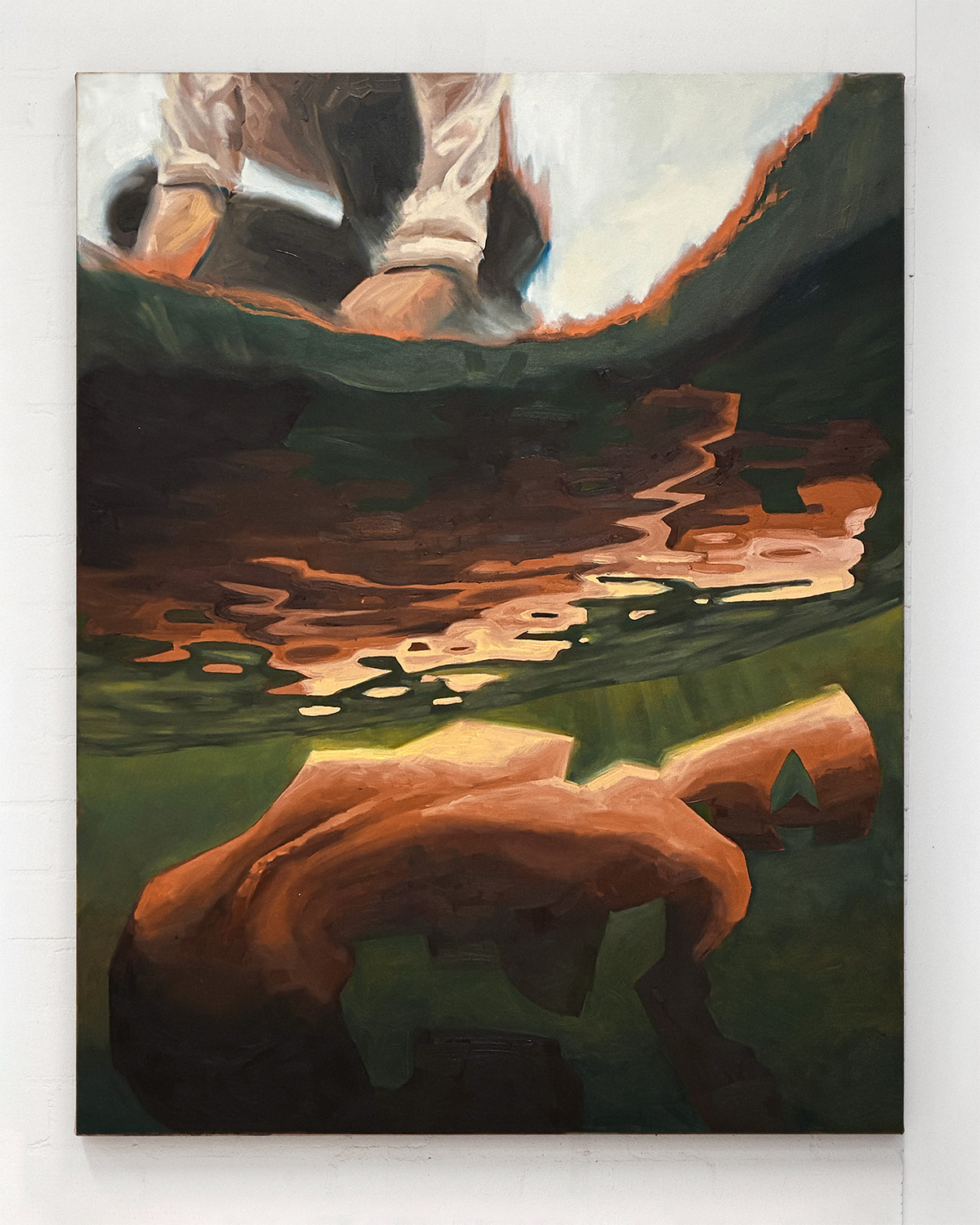
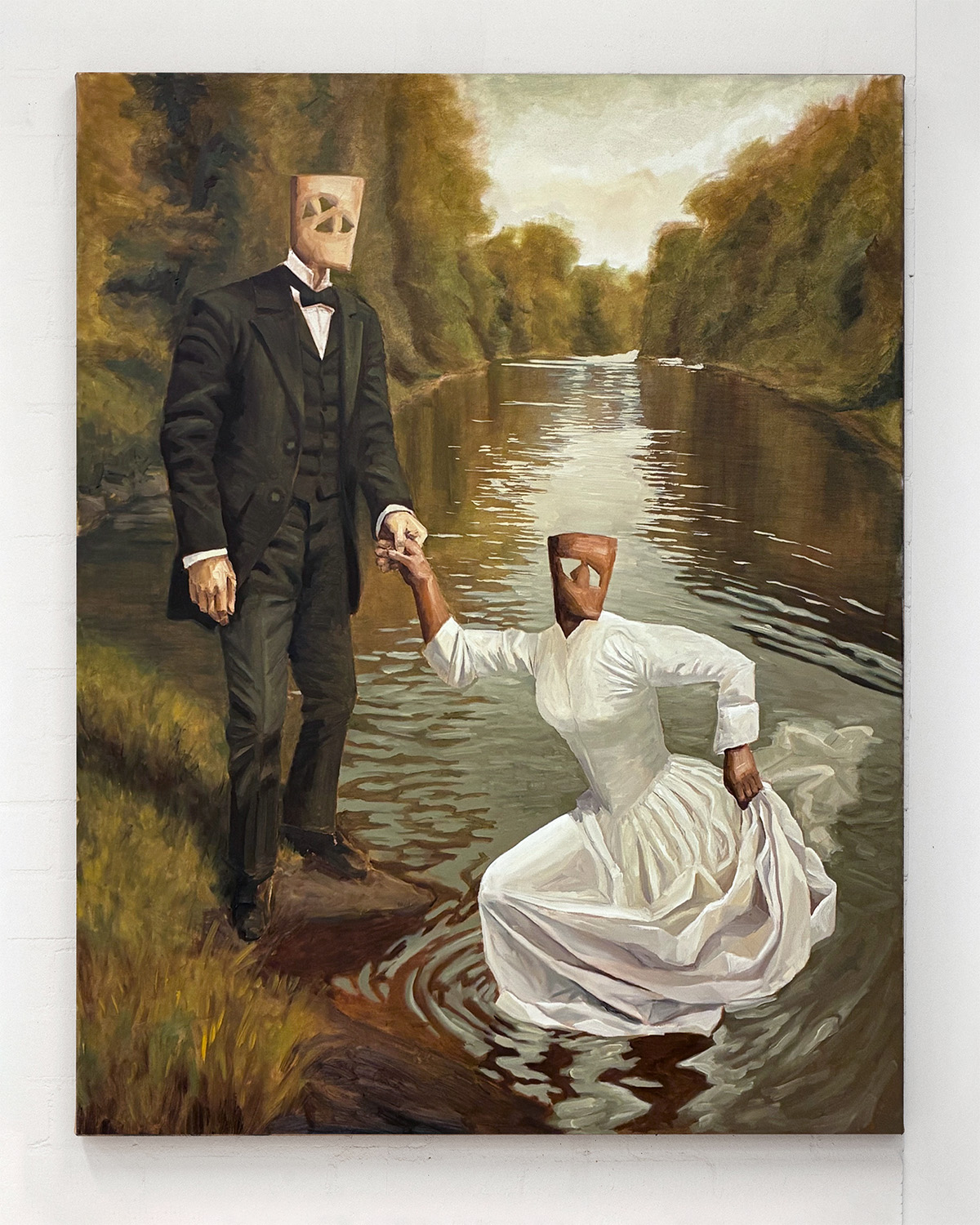

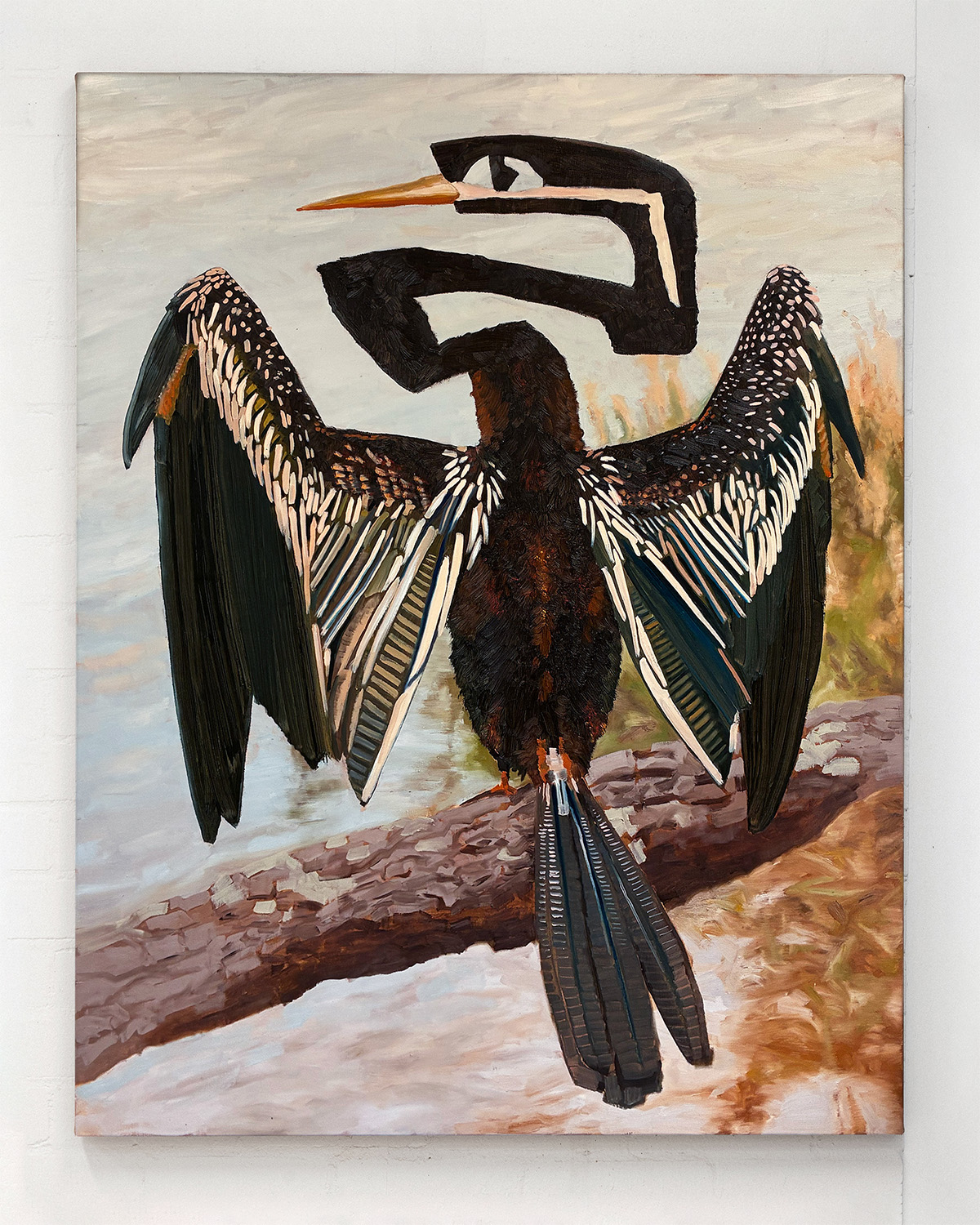

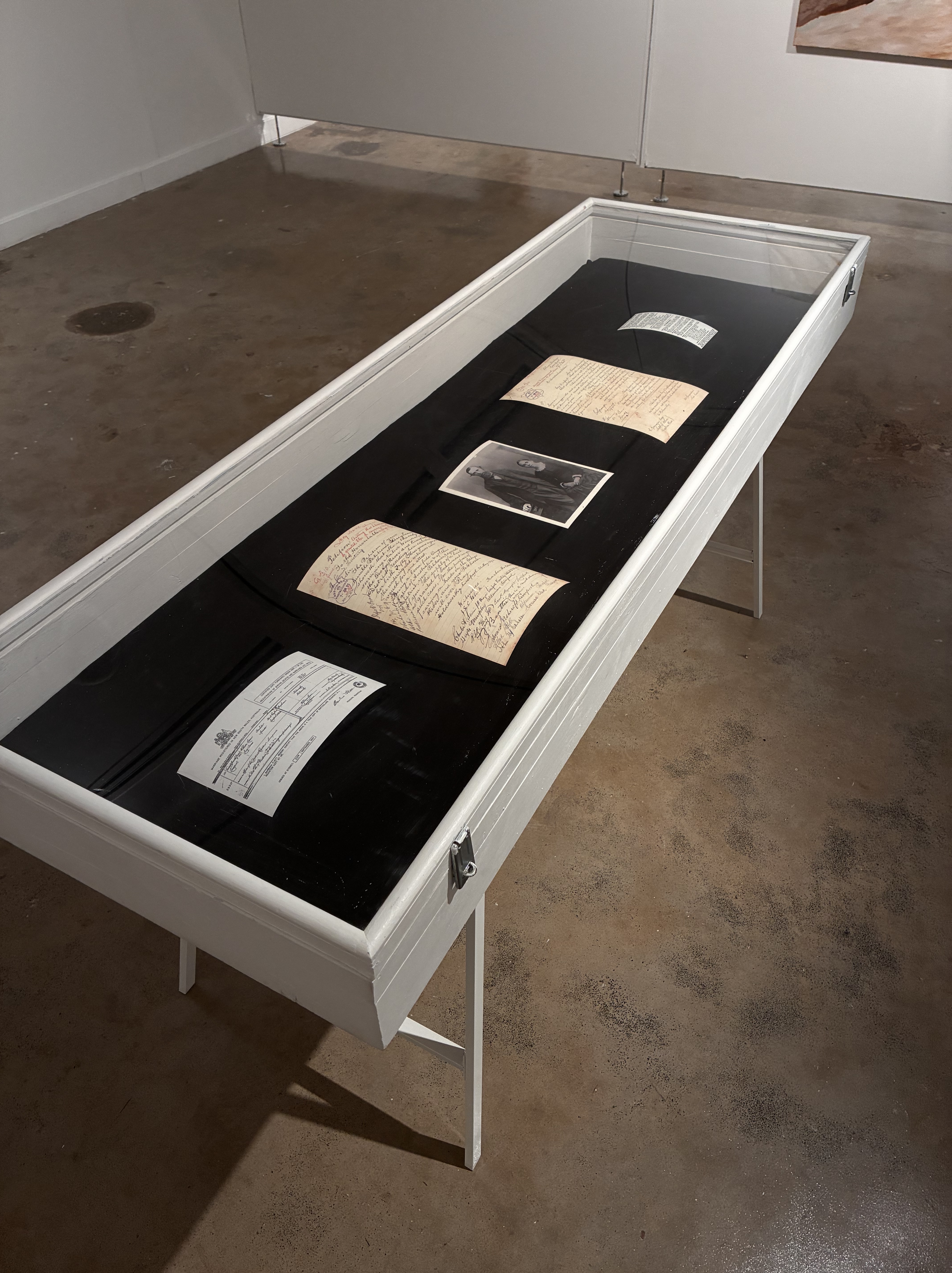

This project comprises a series of narrative paintings and is guided by the central research question: How can contemporary painting, grounded in experiences of Country, foreground intergenerational Aboriginal memory and lived experience to critically reflect on the silences and biases within colonial records? The project focuses on reimagining the life of my third great-grandmother and Cabrogal woman, Lucy Leane, by weaving familial oral stories, and lived experience together with the fragmented traces of her histories that survive in the present.
The study draws on the narrative strategies of magical realism, particularly as seen in Paula Rego’s painting First Mass in Brazil and the literary form exemplified by Alexis Wright’s novel Carpentaria. These influences inform the conception of an embodied and emotionally resonant account of histories that incorporates Dharug ontologies and non-linear conceptions of time. This project draws on a post-colonial framework of magical realism, which departs from its European art-historical lineage, to unsettle stagnant familial stories of Lucy’s life and broader colonial narratives.
Grounded in practice-based and Indigenous research methodologies, the project employs interconnected methods including iterative studio experimentation, journalling, sifting through and collecting archival traces, listening to stories, and immersive engagements on Country. The studio research draws on post-colonial theories on the authority of the archive and case studies of Julie Dowling and Daniel Boyd to explore how Aboriginal lived experience and historical records can be re-presented through painting.The practical component consists of large-scale oil paintings that reimagine critical moments from Lucy Leane’s life. Through symbolic imagery, cross-temporal narrative, expressive colour and tone, and the presence of a recurring figurative character, these works evoke her story from incomplete memory, holding space for emotional truths rather than definitive historical claims.
This project contributes to ongoing conversations surrounding Aboriginal self-representation, the authority of the archive, and the way in which familial oral storytelling can be shaped by the impact of the Australian colonial agenda.
